171 Days of Air Pollution Exceeding Legal Limits: Kosovo’s Choking Air
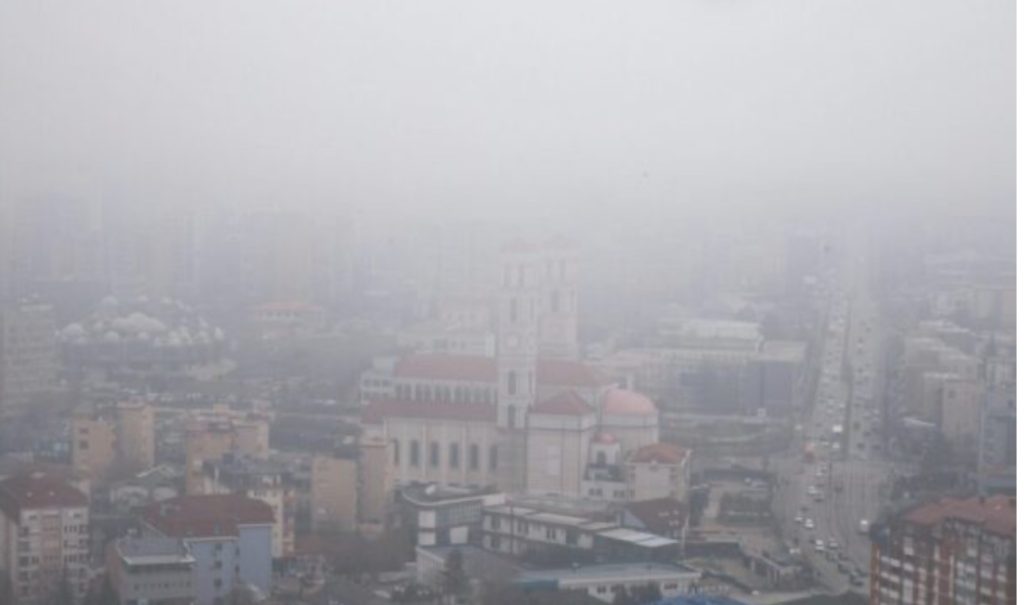
Nearly half the year with air pollution exceeding legal limits. This is the picture painted by Kosovo’s 2025 air quality monitoring data.
Kosovo’s state monitoring network recorded 171 days where daily thresholds for PM10 particulate matter—pollutants capable of penetrating the respiratory tract and damaging health—were exceeded.
The data was made public on November 10 by the Ombudsman Institution in a report warning that air pollution remains one of the country’s most pressing environmental and health challenges.
The report, based on data from Kosovo’s Environmental Protection Agency, notes that pollution peaks primarily during winter, when the use of solid fuels for heating surges.
But what do these figures reveal about the air Kosovars breathe? How does Kosovo compare to other European countries? And why does the problem persist despite repeated warnings?
What Lies Behind PM10 and PM2.5 Particles?
Air pollution is not always visible.
Among the most concerning pollutants are fine particulate matter suspended in the atmosphere, known as PM10 and PM2.5.
PM10 particles measure up to ten micrometers in diameter, while PM2.5 are even smaller.
PM10 can enter the respiratory system, whereas PM2.5 penetrate deeper into the lungs and may even enter the bloodstream.
Exposure to these particles is linked to increased risks of respiratory diseases, cardiovascular problems, and premature death.
According to the World Health Organization (WHO), the annual average concentration of PM2.5 should not exceed five micrograms per cubic meter of air. For PM10, the annual guideline is 15 micrograms.
Why Is Kosovo’s Air Polluted?
The sources of pollution are numerous, but three stand out: energy production from lignite, household heating with wood and coal, and road transport.
Kosovo’s power plants rely on lignite, while many households continue to use solid fuels for heating.
A 2024 WHO assessment of indoor air pollution in Kosovo found a strong link between wood-burning for heating and health concerns.
The report emphasized that heating and cooking methods significantly impact the quality of air that citizens inhale even indoors.
During winter, atmospheric conditions can worsen the situation. When cold air remains trapped near the ground, pollutants disperse more slowly, and their concentration rises.
This explains why pollution often peaks during months when heating demand is highest.
How Does Kosovo Compare to Other Countries?
The issue is not unique to Kosovo.
According to the European Environment Agency, in 2024, most Western Balkan countries recorded PM2.5 concentrations exceeding the European Union’s annual limits.
The agency identifies the use of solid fuels, industry, and older vehicles as key contributors to pollution in Central, Eastern, and Southeastern Europe.
A 2026 report by the Organization for Economic Co-operation and Development (OECD), published in October, shows that the health consequences are particularly severe in the Western Balkans.
The regional average was 126 premature deaths per 100,000 inhabitants, compared to 39.5 in the European Union—more than triple.
North Macedonia had the highest reported rate in the region, with 146 deaths per 100,000 inhabitants, while Montenegro had the lowest, with 89.
In an earlier report this year, the National Institute of Public Health also warned about the health impacts of air pollution and called, among other measures, for stricter technical controls on vehicles and continuous monitoring of power plant filters.
Why Isn’t the Problem Being Solved?
The Ombudsman Institution does not see the issue as stemming solely from pollution sources but also from how institutions respond to it.
The report highlights a lack of human and technical capacity for inspections, weaknesses in enforcing legislation, and a need for better inter-institutional coordination.
In European countries, measures to improve air quality include expanding centralized heating systems, insulating buildings, limiting industrial emissions, and developing cleaner transport.
For Kosovo, these measures require long-term investment but also the enforcement of existing regulations.
The Ombudsman reminds that protecting citizens from pollution is not just an environmental policy issue but also a state obligation to uphold human rights.
During the government program presentation in September, Prime Minister Albin Kurti promised the modernization of Kosovo A and Kosovo B power plants.
Kurti also announced plans to expand centralized heating in Pristina and extend it to eight other municipalities, as well as invest €150 million in energy efficiency for public buildings and households. /REL
Source: orainfo.net
Note: This material has been adapted for informational purposes by the Kosovo.Today portal.