
Erdogan and the risks of military alliances in the Middle East
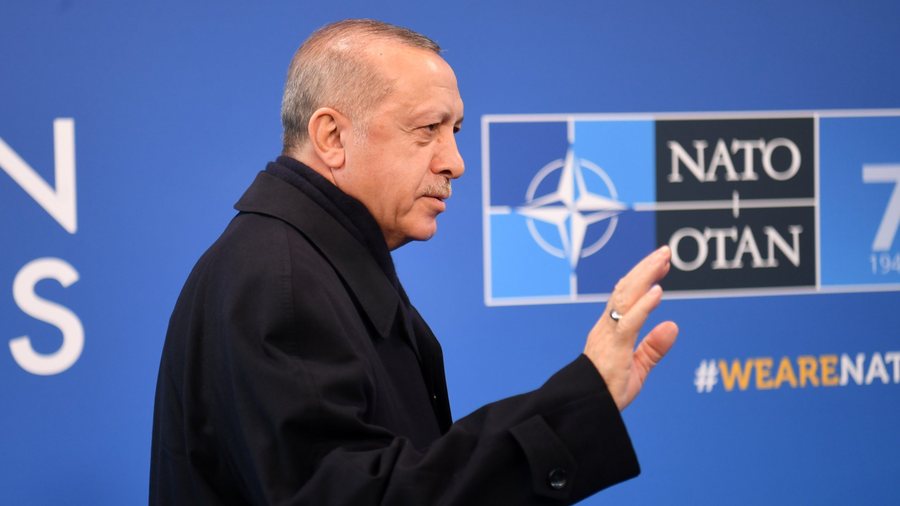
Erdogan and the risks of the great power game in the Middle East
Turkey, after returning to the regional scene, is striving to transform itself from an influential power into a strategic leader in the Middle East. However, President Recep Tayyip Erdogan’s efforts to build a new security architecture through military alliances may bring unpredictable and unclear consequences.
Since the Hamas attack on Israel in October 2023, the region has entered a period of deep transformation. Wars in Gaza, Iran, and the Persian Gulf have shaken the balances that Saudi Arabia and the United Arab Emirates were trying to build through economic cooperation and normalization of relations with their rivals. Instead of a more stable system, the Middle East is now facing new insecurity, military rivalries, and simultaneous attempts to fill the gap created by the weakening of previous equilibriums.
Turkey, backed by American support and its rapprochement with key Arab powers, has strengthened its strategic position. However, its return as a regional force does not mean it can single-handedly dictate the future order of the Middle East. Instead, the views of Meliha Benli Altunishik, an analyst at *Foreign Affairs*, suggest that ambitions to build a new security architecture aligned with Ankara’s interests may produce more conflict than stability.
Military alliances and the limits of Turkish ambitions
Turkey has sought to normalize relations with Arab powers, achieving mixed results. The Mekka Defense Pact, signed in August 2024 between Turkey, Saudi Arabia, and Pakistan, aims to strengthen military cooperation. However, the stated goals of such an alliance do not necessarily reflect how other countries perceive it.
Iran, Israel, and the Houthis may view this alliance as a threat and take measures to test its resilience. This is one of the fundamental challenges facing efforts to build security through limited blocs in the Middle East. When a group of states strengthens military cooperation, those left outside often feel even more insecure and seek ways to counter the new power.
Turkey also faces the risk of being drawn into conflicts involving its partners. The Turkish Parliament has ratified the Mekka Defense Pact, but security commitments could create political obligations that extend beyond initial intentions. Sending Turkish troops to Saudi Arabia would require special parliamentary approval and could involve Turkey in a broader conflict.
Erdogan’s strategy: diplomacy and limiting engagements
To overcome these risks, Erdogan has pursued a strategy that relies on rapprochement with Washington, normalization of relations with Arab powers, and efforts to resolve the conflict with the Kurdistan Workers’ Party (PKK). Relations with former U.S. President Donald Trump have helped secure support for Turkey’s expanded role in Syria.
Turkey has acted as a mediator between the United States and Iran and participated in diplomatic efforts to broker a ceasefire between Israel and Hamas. However, American support has clear limits. At the Peace Board summit, Turkey was not included in plans for deploying international forces or training police in Gaza.
In brief
Turkey has the potential to consolidate stability in its vicinity, such as through the peace process with the PKK and the stabilization of Syria. This would require a focus on core objectives and the use of diplomacy and economic cooperation to expand its influence. Unlimited military engagements, on the other hand, could draw Turkey into conflicts without making the region any safer.
Notable figures
Source of the news: infoshqip.com
Note: This material has been prepared for informational purposes by Portali Kosova.Today.


 Advertisement
