
France: Violence and Political Polarisation in Sixth Consecutive Week of Mass Protests

France is currently facing a tense period marked by massive protests that have now lasted for six weeks, where peace and violence are intertwined. High public debt, social dissatisfaction, and rising prices are the main causes of public anger, while protesters blame police brutality as one of the key issues.
The demonstrations, which have characterized the streets of Paris and other cities, have also included acts of violence, theft, and damage to private property. According to reports, more than 1,000 police officers were injured during the latest clashes, while some protesters suffered serious injuries, including loss of limbs.
Emmanuel Macron blames left-wing extremists
French President Emmanuel Macron has blamed left-wing extremist groups and individuals he considers delinquents for the current unrest. He claims these groups aim to overthrow the French Republic, though their identities and organization remain at the center of debate.
Black Bloc: Tactics and the discontent of the youth
BBC journalist Katya Adler spoke to several protesters linked to the "Black Bloc" movement, which frequently appears in European demonstrations during tense moments. In an interview, an 18-year-old with the pseudonym Nas stated that violence is the only way to be heard by authorities.
He and his peers, who come from the outskirts of French cities, mentioned school problems, lack of jobs, and social inequality as the main reasons for their anger. They denied being organized by radical leftists, saying they act from personal dissatisfaction.
Another 17-year-old activist, with the pseudonym Starflix, admitted to being part of the "Black Bloc" movement. He explained that protesters use homemade paint bombs, rocks, and other objects to attack the police. According to him, wearing the same clothes and face masks makes it harder for authorities to identify participants.
"Black Bloc is not just an organization, but a tactic. Some of us use violence to achieve governmental reforms. I want to bring about a revolution," Starflix declared to the BBC.
Social media and coordination of protests
Social media platforms like Signal and Telegram play a crucial role in coordinating protesters and organizing meetings during demonstrations. Violent activists use these platforms to plan actions and communicate with each other.
Damage and recent clashes
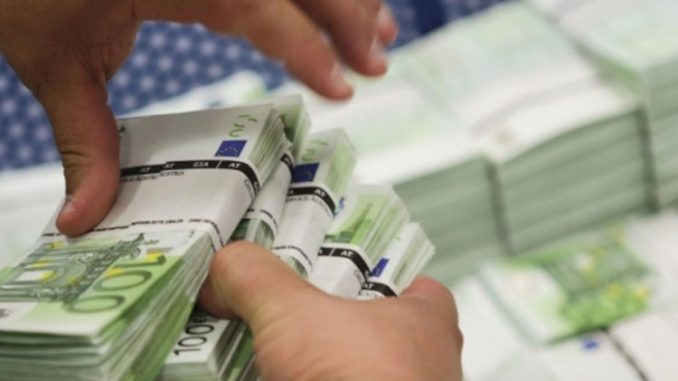
Clashes between protesters and police have caused significant damage to private property. According to the French Federation of Security, on October 17 alone, damages to shops and private property amounted to around 207 million euros. Authorities have responded with increased police force, using tear gas, batons, and riot control grenades.
Tensions spread beyond Paris
Radical left-wing movements are not limited to Paris but are also present in rural areas of France. In the city of Limoges, a fire during protests severely damaged a historic municipal building. A 34-year-old man is in custody suspected of involvement in the fire, though he denies the accusations.
A 39-year-old activist, part of the radical left for over two decades, declared he feels responsible for the future of the youth and criticized how the state treats protesters.
Threat to the Republic?
French intelligence services estimate there are around 5,000 left-wing extremist activists in the country. However, according to former police commissioner Michel Klein, these groups lack the necessary capacity to pose a serious threat to the French state.
He warns that clashes between left-wing extremists and right-wing extremists could escalate before the upcoming presidential elections. Meanwhile, vigilante groups from the far-right have begun appearing on the outskirts of protests in several cities, claiming they aim to protect French streets.
The radical left candidate, Jean-Luc Mélenchon, and his party, La France Insoumise (LFI), participate in many of the demonstrations but deny any connection to acts of violence.
France in a deep political and social crisis
The protests unfold in an atmosphere of strong political polarization, as the country prepares for upcoming presidential elections. BBC analysis shows that, although radical groups express revolutionary objectives and use violence, they do not appear united or powerful enough to threaten the Republic’s institutions.
Nevertheless, economic dissatisfaction, clashes with the police, and polarization between left and right are creating an increasingly tense situation ahead of the elections. The message of one activist sums up the stance of part of this movement: “I don’t want to destroy France. I want to destroy the capitalist system.”
In brief
France is facing a deep political and social crisis, where protests and violence are intertwined. Radical left groups, such as "Black Bloc," use violence as a means of expressing dissatisfaction, but they lack the power to seriously threaten state institutions. Political polarization and economic discontent are escalating, creating a tense climate ahead of the upcoming elections.
People mentioned
- Emmanuel Macron - Emmanuel Macron
- Katya Adler - BBC journalist
- Nas - Pseudonym of an 18-year-old activist
- Starflix - Pseudonym of a 17-year-old activist
- Michel Klein - Former French police commissioner
- Jean-Luc Mélenchon - Radical left candidate
Source of the news: ina-online.net





 Advertisement
