
New Israeli Coalition: Eisenkot Strengthens Alliance with Democrats, but Netanyahu Faces Challenges
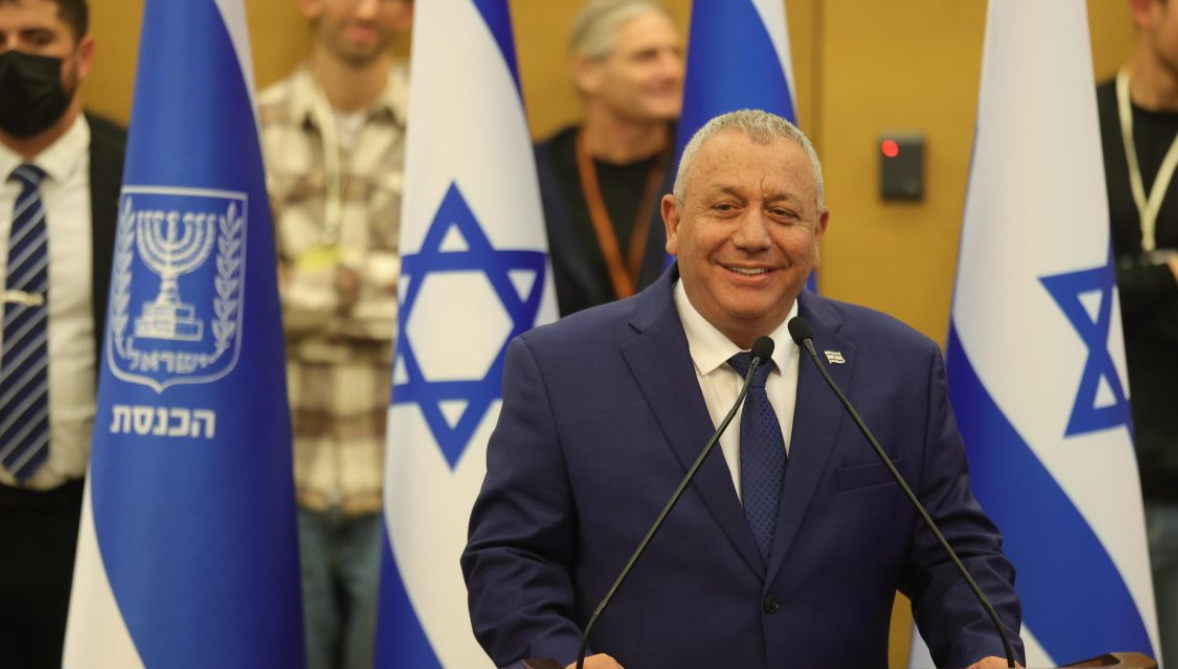
New Israeli Coalition: Eisenkot Strengthens Alliance with Democrats, but Netanyahu Faces Challenges
Efforts to form Israel’s new government have taken another significant step as Gadi Eisenkot and his party “Yashar” reached an agreement to form a coalition with the left-wing party “Democrats.” This move comes after the merger of “Israel Beiteinu” with Eisenkot’s alliance, further bolstering his position in parliament.
The agreement was confirmed through a joint statement from both parties. “Gadi Eisenkot and Yair Golan, leader of the Democrats, have reached an agreement to form a coalition between the two parties”, the document states.
This agreement follows a previous disagreement between the Democrats and Eisenkot, which surfaced two days ago when Golan’s party suspended negotiations over the distribution of ministerial posts. However, this new deal marks a crucial step toward forming the new government.
Yet, securing a parliamentary majority remains challenging. Currently, Eisenkot’s, Liberman’s, and Golan’s parties control only 36 seats, far short of the 61 needed to form a government. In this context, the party “Beyachad” led by former Prime Minister Naftali Bennett, holding 12 seats, remains a key player. Bennett, who is considered part of the anti-Netanyahu bloc, has yet to formalize an agreement.
Meanwhile, Israeli opposition continues to debate the governance formula. Some allies advocate for cooperation with Arab parties, while others prefer alliances with ultra-Orthodox parties or even a national unity government with Benjamin Netanyahu’s Likud party. The Democrats have pressured Eisenkot to collaborate with Arab lists, arguing that this would increase the chances of ousting Netanyahu.
Attempts at a national unity government with Likud have yielded no results. Israeli media report that four rounds of talks between representatives of Yashar and Likud have produced no visible progress. Avigdor Liberman, leader of “Israel Beiteinu,” accused Netanyahu of trying to obstruct the formation of the new government.
“Netanyahu will drag out negotiations for a unity government until the last moment, will seek a pretext to drop them, and even if such a government is formed, he will try to create a crisis within a few months to push Israel into new elections again”, Liberman declared.
Eisenkot has until December 6 to form the new government, with a possible extension until December 20. If he secures parliamentary backing, he will replace Netanyahu as Israel’s prime minister, as the recent elections failed to produce a clear majority for any political camp.
In Brief
The agreement between “Yashar” and “Democrats” is a significant step for Eisenkot, but the path to forming a government remains difficult. A parliamentary majority is not yet secured, and alliances with Arab or ultra-Orthodox parties are still under debate. Meanwhile, Netanyahu is accused of manipulating efforts to block the formation of the new government.
Notable Figures
- Gadi Eisenkot - Leader of the “Yashar” party
- Yair Golan - Leader of the “Democrats” party
- Avigdor Liberman - Leader of the “Israel Beiteinu” party
- Naftali Bennett - Former Prime Minister and leader of the “Beyachad” party
- Benjamin Netanyahu - Prime Minister of Israel
Source of the news: infoshqip.com
Note: This material has been processed for informational purposes by Portali Kosova.Today.





 Advertisement
