
Rivers Producing Massive Snowfall Leave Scientists Astonished
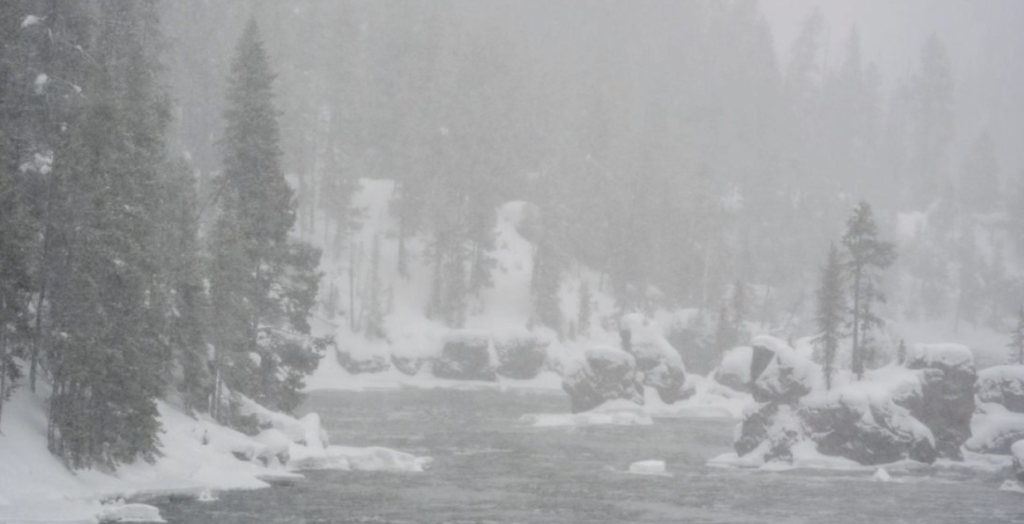
A rare natural phenomenon, where water and extreme temperatures interact to create intense snowfall, continues to captivate people in areas with severe winters. Under certain atmospheric conditions, a river can significantly contribute to the formation of large snow accumulations, covering banks, forests, and surrounding communities with a thick white layer.
What appears at first glance to be a snow-producing river is actually the result of a complex meteorological process, where moisture, low temperatures, and air mass movement create conditions for heavy snowfall.
How Can a River Generate So Much Snow?
The process begins when a mass of very cold air passes over the relatively warmer water surface.
Due to the temperature difference, moisture evaporates from the river’s surface, mixing with the cold air. This moisture rises into the atmosphere, cools, and condenses, forming clouds that can produce snowfall.
If atmospheric conditions remain favorable, this process can continue for an extended period, resulting in intense, localized snowfall near the water.
However, the amount of snow is not solely dependent on the river. Wind speed and direction, air temperature, humidity, and surrounding terrain also play a significant role.
Why Do Such Large Snow Accumulations Occur?
A key factor is the continuous supply of moisture. As long as cold air continues to pass over the water and the atmosphere remains unstable, new snow clouds can form repeatedly.
In some regions worldwide, this meteorological mechanism causes exceptionally heavy snowfall. Notably, areas near the Great Lakes in North America are known for the phenomenon called lake-effect snow.
For example, in the city of Buffalo, New York, snowfall triggered by this phenomenon has reached extreme levels. Cold air masses passing over Lake Erie’s waters can create bands of intense snowfall, leading to massive snow accumulations within hours.
Consequences for Nature and People
While the scenes created by this phenomenon are breathtaking, heavy snowfall can also pose serious challenges.
Roads may become impassable, transportation can be disrupted, and settlements may be temporarily isolated. In severe cases, snow can damage buildings, while low temperatures increase risks for people and animals.
On the other hand, these snowfalls also benefit ecosystems. Snow acts as an insulating layer for the ground, helps retain moisture, and, upon melting, contributes to the water supply of rivers and reservoirs.
Source of the news: orainfo.net
Note: This material has been adapted for informational purposes by the Portal Kosovo.Today.