
Trump-Putin Deal: US Offering Russia Economic Incentives for Peace in Ukraine
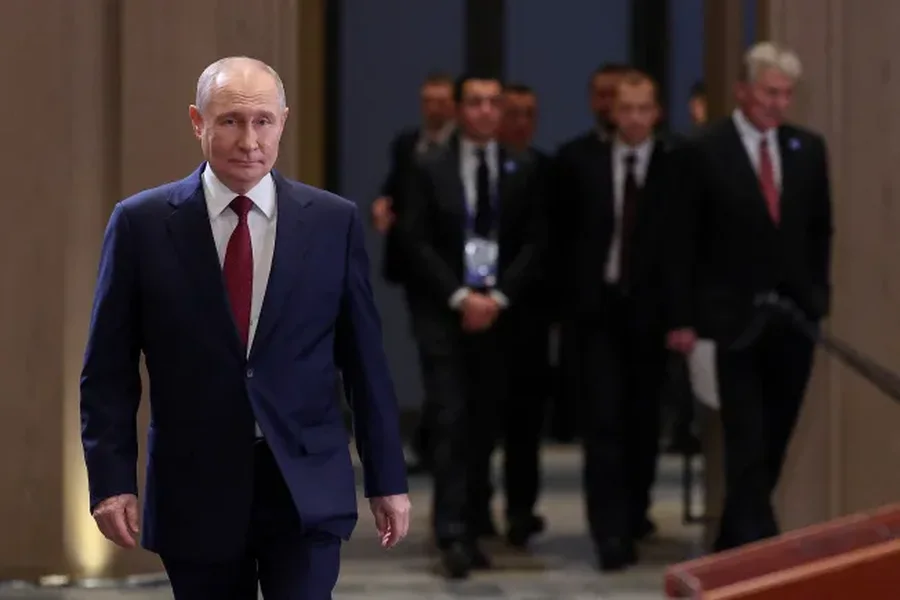
Trump-Putin Deal: US Offering Russia Economic Incentives for Peace in Ukraine
Analyst Michael C. Desch suggests that a peace deal in Ukraine could only be achieved if the US and the West offer Russia economic and diplomatic incentives, while Ukraine would be forced to make significant compromises.
According to the analyst, such a deal would include territorial concessions from Ukraine, abandonment of NATO aspirations, and easing of sanctions against Moscow. Desch emphasizes that a Western strategy based solely on sanctions and military aid has failed to force the Kremlin to change its objectives.
Desch assesses that Ukraine has achieved some tactical successes in 2026, such as the Vivaldi Operation and the strike on the Crimean Bridge, but these have not resulted in strategic victories. Russia continues to hold the upper hand in some parts of the front and uses encirclement tactics to gain territory.
Desch argues that this situation could lead to high costs for Ukraine without guaranteeing the return of occupied territories. He proposes that the US limit military aid to Ukraine if it refuses to make compromises, including abandoning NATO and territorial concessions.
At the same time, the analyst suggests that the Trump administration offer Russia economic incentives, such as easing restrictions on energy exports and financial transactions. Desch stresses that this could create conditions for a diplomatic compromise.
NATO and European Security Concerns
Desch contradicts the idea that concessions to Russia could provoke the Kremlin to attack European nations. He emphasizes that NATO holds a significant advantage in terms of military personnel and equipment, and that Russia lacks the capacity to wage war against the Alliance.
The analyst assesses that the Kremlin’s objective is to limit new NATO memberships and maintain control over eastern Ukrainian territories. He considers this a reflection of Russian objectives, but does not accept it as a shared stance among all parties.
The Risk of Escalation and Shifts in Western Stance
Desch warns that the prolongation of the war could increase the risk of direct escalation between Russia and NATO. He mentions concerns over military exercises near Kaliningrad and the possibility of conflict expansion.
In the West, divisions are emerging over the costs of supporting Ukraine. Desch mentions diplomatic contacts between Finnish Prime Minister Alexander Stubb and Norwegian Prime Minister Jonas Gahr Støre with Vladimir Putin, as well as discussions in the US about America’s role in European security.
The analyst suggests that a peace deal should include security guarantees for Ukraine outside NATO structures.
Peace in Ukraine and Trump’s Political Legacy
Desch links the possibility of a deal to Donald Trump's political ambitions. He argues that a deal with Moscow could serve America’s long-term strategy to limit the rapprochement between Russia and China.
The analyst acknowledges that achieving peace remains difficult and that Trump’s motives are not purely humanitarian. Nevertheless, he stresses that an American administration willing to use pressure and incentives could create opportunities for ending the conflict.
Desch evaluates that peace in Ukraine may require painful compromises, including territorial concessions and limitations on Kyiv’s aspirations for NATO membership. He considers this alternative preferable to the continuation of a war that does not produce decisive strategic results.
In Brief
Analyst Michael C. Desch suggests that a peace deal in Ukraine would require significant compromises from Ukraine and economic and diplomatic incentives from the US to Russia. This would include territorial concessions, abandonment of NATO, and easing of sanctions. Desch assesses that this would be preferable to the continuation of an uncertain war.
Notable Figures
Source of the news: infoshqip.com
Note: This material has been processed for informational purposes by Portali Kosova.Today.




 Advertisement
