White House picks new US ambassador to Kosovo: Why now and what lies ahead

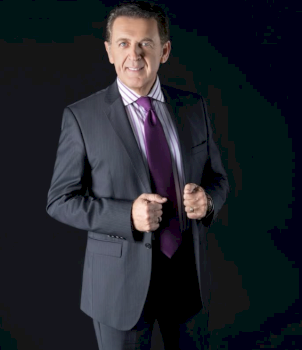
The White House has selected a candidate, but this does not yet mean Kosovo will have an American ambassador. President Donald Trump has nominated Mikhail Bogachek, the executive director of the Organization of American States (OAS), for the position of U.S. ambassador to Kosovo. His name was sent to the Senate on November 10. This brings to a close nearly a two-year wait for a nomination. The arrival of the ambassador in Pristina, however, still depends on a Senate undergoing a shift in majority and a relationship that continues to bear the weight of the suspension of the Strategic Dialogue.
Who is the nominee and what can be expected
The biography published by the OAS, summarized by KosovaPress, presents Bogachek as a professional from Florida with over 25 years of experience in the private sector, primarily in healthcare, technology, and institutional management. At the OAS, he oversees administration, finances, and human resources. Previously, he led operations for a pharmaceutical profit company. He has also founded companies in the fields of cybersecurity and health data. He holds a doctorate in bioengineering and speaks Russian, Ukrainian, and Hebrew. In 2023, he was elected to the board of the Republican Hebrew Coalition.
Bogachek does not come from traditional diplomacy. While this is not unusual for American political nominations, it raises the question of what Kosovo can expect. His experience in institutional management could help guide a large embassy and handle practical matters, such as security and investments. On the other hand, he will need to quickly familiarize himself with the region’s complex issues, from the north to the dialogue with Serbia. His ties to Republican organizations are a political context, but they do not inherently prove privileged access in the White House.
Two years without an ambassador, a stalled dialogue
The last American ambassador, Jeffrey Hovenier, took office on January 10, 2022, and left Kosovo on December 30, 2024. Since then, the embassy has been led by charge d’affaires, Anu Prattipati. The embassy has not been inactive. Just this week, Prattipati met with Interior Minister Xhelal Sveçla to discuss security cooperation, and with Defense Minister Ejup Maqedonci. In the second meeting, the U.S. reaffirmed its support for the Kosovo Security Force (FSK).
However, the absence of an ambassador coincided with the most tense period in relations. On September 12, 2025, the U.S. embassy announced the indefinite suspension of the Strategic Dialogue, citing concerns over the actions of the incumbent government. According to Radio Free Europe, Washington had reservations about measures taken against Serbian institutions in Kosovo and criticism of the Constitutional Court. In July of this year, the State Department told REL that the dialogue would resume once conditions were met, including Kosovo fulfilling its commitments to the Serb community.
Opinions in Pristina have been divided. Prime Minister Albin Kurti, during a visit to the U.S. last year, linked the suspension to actions by institutions in the north. He stated that he could not compromise on the rule of law. Opposition parties and economic chambers, on the other hand, warned that the decision harmed the country’s economic and diplomatic interests.
Regional comparisons are also telling. In June, the White House nominated ambassadors for Serbia, Bosnia and Herzegovina, and Montenegro, while Kosovo was left off the list. The Senate confirmed Eric Wendt for Albania on August 7. According to REL, candidates for the other three countries are still awaiting confirmation. Kosovo’s nomination comes roughly five months after those of its neighbors.
The new Senate and the tight schedule
The nomination comes one week after the midterm elections of November 3, in which Democrats won a majority in the Senate. According to *The Hill*, this gives Democrats a much stronger voice in confirming administration nominees. The new Senate convenes in January 2027. Until then, the majority remains Republican, and the current Senate still has the opportunity to confirm the candidate.
The process begins with a hearing in the Foreign Relations Committee, continues with a committee vote, and concludes with a vote in the full Senate. Only then does the formal appointment and presentation of credentials follow. According to Senate rules, nominations not acted upon by the end of the session typically return to the president, who may resubmit them. There are only a few weeks of work left before year’s end, while three regional candidates have been waiting since June. Therefore, a swift confirmation cannot be taken for granted.
Belgrade in transition
Pristina has welcomed the news. Kosovo’s ambassador to Washington, Ilir Dugolli, congratulated Bogachek and expressed readiness to strengthen “lasting friendship and the unique relationship” between the two countries.
If confirmed, Bogachek will take office in a region undergoing change. The Student List won Serbia’s parliamentary elections on October 25, ending Aleksandar Vučić’s 14-year rule. However, the victory has yet to translate into a government. According to KosovaPress, the movement is expected to form its own government but has yet to announce a prime minister candidate or a full program.
In Paris on November 10, Kurti stated that the new leadership in Belgrade must recognize Kosovo as an independent state and demanded the extradition of Milan Radoičić for the Banjska attack. At the same forum, Albanian Prime Minister Edi Rama declared that Kosovo’s independence is irreversible. Meanwhile, Student List candidate Fegja Dimović, after a visit to Kosovo, described it as an integral part of Serbia. The incoming ambassador may thus face not only a new Serbian policy but also a prolonged transitional period in Belgrade.
Political change or improved communication?
For Kosovo, the most pressing question is not just when the ambassador will arrive, but with what message. A new ambassador could improve communication and build personal trust, but U.S. policy is determined in Washington. The State Department has tied the resumption of the Strategic Dialogue to concrete conditions. If these conditions remain, a change in the name at the helm of the embassy does not automatically signal a fresh start. Much will depend on the steps taken by Pristina and how openly contentious issues are addressed.
For Albanians in Germany, Switzerland, and elsewhere, this is not a distant issue. Kosovo–U.S. relations impact security and the investment climate at home, as well as Kosovo’s path toward Euro-Atlantic structures. .
Possible Scenarios and What to Watch
The possible scenarios are three. The first: the current Senate confirms Bogachev before the end of the year, and he could arrive in Pristina at the start of 2027. The second: the nomination is sent back to the White House and resubmitted to the new Senate, with a delay of several months. The third: the Senate hearing on Bogachev is referred back to the Strategic Dialogue platform, focusing on the north and Serbia after Vučić. In this case, Pristina will also need to demonstrate what it has done to meet the conditions.
In the coming days, four key developments must be monitored:
– whether the Commission on External Relations sets a date for the hearing;
– whether nominations for Serbia, Bosnia and Herzegovina, and Montenegro proceed;
– what steps the Kosovo government takes to meet the Strategic Dialogue conditions;
– how the new Belgrade government will frame its stance on Kosovo and the [[K1]] case.
The nomination of Bogachev indicates that Washington aims to have a fully mandated ambassador in Pristina again, but it does not resolve the outstanding issues between the two countries. Trump made the selection, and the Senate will decide on the candidate. Pristina’s preparation for the matters that will arise at the ambassador’s table does not depend on his arrival date.
Source: ina-online.net
Note: This material has been adapted for informational purposes by the portal Kosovo.Today.