Warnings of a tough winter ahead as rising costs hit businesses and consumers
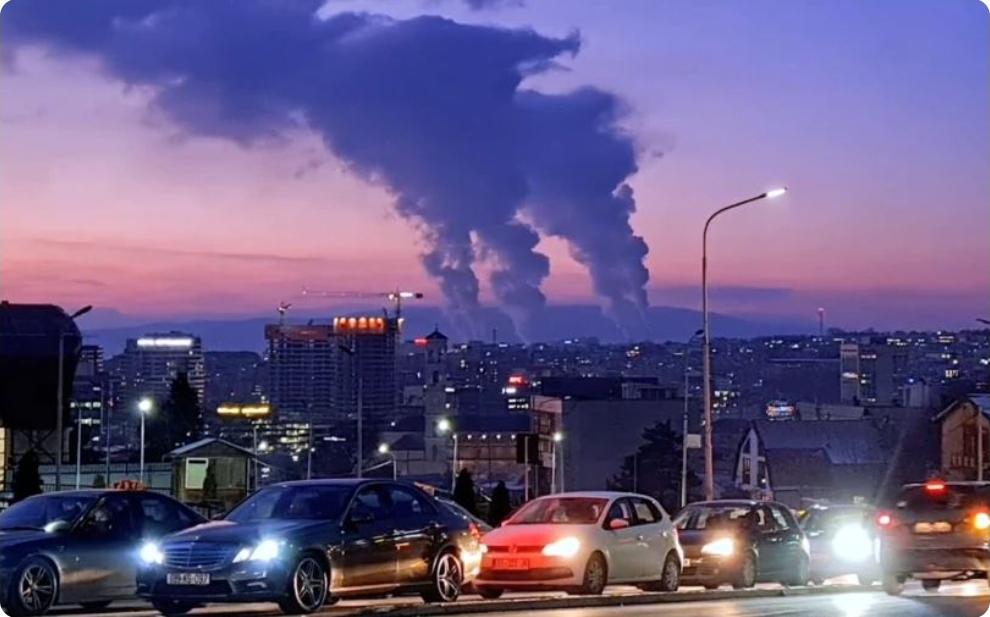
Soaring international energy prices, rising business energy costs, and millions of euros spent on imports are weighing heavily on Kosovo’s energy sector as winter approaches.
Economy Minister Artane Rizvanolli has once again warned of a difficult energy winter for Kosovo and Europe, citing prices reaching up to 500 euros per megawatt-hour on international markets.
Yet, four years after similar warnings, it remains unclear what concrete measures the government is taking to prepare the country for the winter season.
In a television interview, Rizvanolli warned that Kosovo and the rest of Europe will face challenges this winter, both in terms of electricity supply and pricing.
According to her, international market prices have surged to 500 euros per megawatt-hour, despite temperatures not yet dropping significantly and winter not yet entering its coldest phase.
The minister blamed the conflict in Iran and the closure of the Strait of Hormuz for this situation, comparing it to the energy crisis of winter 2021.
“To put it briefly, this winter will be a difficult one for all of Europe, and globally. For illustration, if you recall, in the winter of 2021, we had a crisis that at the time was unprecedented, around Christmas, when prices and consumption had risen, reaching over 500 euros per megawatt-hour on international markets,” Rizvanolli declared.
She said that even this year, in the first half of November, prices had reached similar levels, with no significant temperature drop yet.
“As we speak, we are in the first half of November, and already in the early days, without it getting much colder, the price on international markets has reached 500 euros. The main reason for this is the conflict in Iran and the closure of the Strait of Hormuz,” the minister stated.
This is not the first warning
Rizvanolli’s warning of a difficult winter is not new.
On September 29, 2022, during a report to the Economic Affairs, Industry, Entrepreneurship, and Trade Committee, the minister had declared that Kosovo and Europe faced a difficult winter, also warning of the possibility of electricity rationing.
“We must all be honest—we are facing a difficult winter, both here and across Europe. We are expected to confront a serious crisis, even to the point of reductions, as some countries have already begun stopping heating above 19 degrees Celsius,” she had stated.
Thus, four years later, the minister’s message remains almost identical: a difficult winter, an energy crisis, and high prices.
“This winter will be a difficult one for all of Europe, and globally,” is the warning Rizvanolli continues to repeat this year.
However, beyond declarations about the international situation, citizens and businesses are waiting to learn what concrete measures the Kosovo government is taking to address the winter season.
Businesses warn of up to 10 percent cost increases
The warnings of a difficult energy winter are accompanied by concerns about the impact of electricity costs on the country’s economy.
The Kosovo Business Association has expressed concern over the rising cost of electricity for businesses operating in the free market, warning that this could directly reflect in the prices of products and services.
According to this organization, based on complaints received from major businesses, the rise in energy costs is expected to affect the pricing of products and services for consumers, with an estimated increase of between 4 and 10 percent.
A particular concern is the impact on domestic producers, who, according to the Association, will struggle to cope with the new costs without raising their product prices.
This situation, they say, could weaken the competitiveness of domestic producers against imported goods, damage production, reduce economic activity, and threaten jobs.
The Business Association has also criticized the transition to a free energy market without a clear transition plan or support measures for businesses, stating that this creates uncertainty and additional costs for the private sector.
“The Kosovo Business Association calls on the Government of the Republic of Kosovo and regulatory authorities: 1. An urgent assessment of the impact of energy costs on the private sector. 2. An examination of mechanisms to ease costs for businesses. 3. Concrete measures to protect domestic production and its competitiveness against imported goods.
Electricity is one of the key factors in production and economic development. Therefore, institutions must act urgently to prevent damage to businesses, price increases, and the weakening of domestic producers’ positions in the market. Domestic production must be supported and protected, not placed in an unfavorable position against imports.”
Over 205 million euros spent on energy imports in ten months
Meanwhile, data on the purchase and import of electricity reveal significant spending by Kosovo, with millions of euros paid daily and totals exceeding 200 million euros over the first ten months of the year.
For the period from October 28 to November 3, 2026, spending on electricity purchases reached 14 million, 915 thousand, 923 euros, and 88 cents.
This means that over seven days, an average of more than 2.1 million euros per day was spent on electricity purchases.
The highest daily expenditure in this period was recorded on October 28, when electricity purchases cost 2 million, 385 thousand, 449 euros, and 33 cents. The day after, on October 29, 2 million, 373 thousand, 489 euros, and 37 cents were spent.
On October 30, the cost of electricity purchases was 2 million, 127 thousand, 378 euros, and 18 cents, while on October 31, 2 million, 349 thousand, 582 euros, and 63 cents were paid.
On November 1, spending dropped to 1 million, 215 thousand, 816 euros, and 59 cents, but this decline was temporary. On November 2, electricity purchases cost 2 million On **[[K1]]**, the cost reached **€300,679.64**, while on **November 3**, it climbed to **€2,163,528.14**. According to Kosovo Customs data, electricity imports from **January to October 2026** totaled **€205,340,697.78**. **January** recorded the highest import value at **€35,806,685**, while **February** saw spending of **€21,817,770**, and **March** stood at **€16,689,268**. In **April**, Kosovo imported electricity worth **€16,866,538**, and **May** saw costs reach **€15,710,488**. **June** saw an increase to **€21,865,528**, while **July** marked the lowest import level of the year at **€9,230,499**. **August** imports cost **€17,200,673**, but **September** saw a significant rise to **€27,691,244**. For **October**, electricity imports totaled **€23,198,693**. **Janina Ymeri**, a deputy from the **Democratic League of Kosovo (LDK)**, reacted to these expenses, highlighting the **€27.6 million** cost in **September**. *"30 days in September, €27.6 million for electricity. The Energy Mafia is at work!"* Ymeri wrote in a public response. Ymeri has repeatedly raised concerns over electricity import costs, power trading, and transparency in energy agreements, often using the term *"energy mafia"* to describe what she sees as a network of vested interests in the sector. Meanwhile, **Kosovo’s Statistical Agency (ASK)** reported in its latest energy statistics that **August 2026** electricity consumption in Kosovo reached **453.38 GWh**, a **17.95%** increase compared to the same month in **2025**. According to ASK, **gross electricity available** was **544.61 GWh**, or **8.46%** higher than in **August 2025**. During this period, electricity imports totaled **400.82 GWh**, while exports reached **311.21 GWh**, including transmission volumes. ASK noted that **renewable energy’s share** in total consumption was **7.42%**, while **hydroelectric production** hit **7.47 GWh**, a **33.24%** rise compared to **August 2025**. On the other hand, **lignite production** in **August** was **477,562 tons**, marking a **3.65%** decline compared to the same period in **2025**./Monitor/
Source: orainfo.net
Note: This material has been adapted for informational purposes by the **Kosova.Today** portal.