Al Jazeera documentary: What lies behind the map reshaping the Middle East?
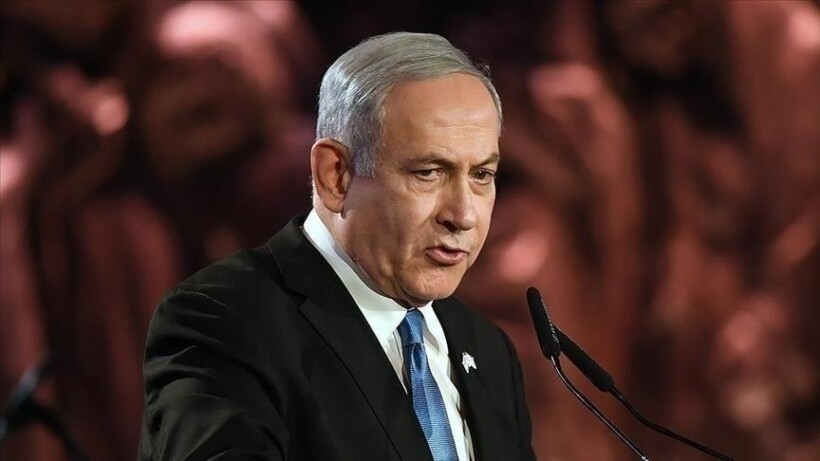
The Al Jazeera documentary examines how a biblical interpretation of history has influenced pro-Israel lobbying in the US and how, according to the author, it connects to debates over territory, security, and the future of the Middle East...
In a large church in San Antonio, Texas, pastor John Hagee presents a map to his congregation that, according to his biblical interpretation, includes Israel and vast areas of neighboring lands. He describes the territory as a divine promise to the Hebrew people, not as an issue to be resolved through negotiations. Hagee founded Christians United for Israel (CUFI), an organization that claims to have over 10 million members and operates as one of the key political support groups for Israel in the United States.
In the 22-minute documentary “Greater Israel: How Christian Zionism Became Policy,” journalist and filmmaker Awad Joumaa analyzes the journey of a religious idea from Protestant sermons to American policy. The documentary’s thesis is that biblical interpretations gain concrete weight when intertwined with voting, donations, lobbying, and state decisions. This is the analytical framework of the author, not proof that every American or Israeli decision stems from a single doctrine.
The electoral and financial base
Christian Zionism supports the idea that the return of the Hebrews to the Holy Land and the creation of the state of Israel are linked to biblical prophecies and the return of Christ. According to data cited by Al Jazeera, white evangelical Protestants make up around 13 percent of the US adult population, roughly 35 million people. A 2018 LifeWay Research survey found that 80 percent of evangelicals viewed the creation of Israel in 1948 as the fulfillment of biblical prophecy; about two-thirds linked the modern state to biblical promises.
The Pew Research Center reported that 82 percent of white evangelical voters supported Donald Trump in the 2024 elections. The Chicago Council on Global Affairs found that same year that 64 percent of this group considered Israeli actions in Gaza justified and 60 percent opposed reducing US military aid. These figures highlight a strong political alignment, without implying that all evangelicals share identical views.
“Greater Israel,” what lies behind the map
The influence is also backed by financial contributions and institutional access. The International Fellowship of Christians and Jews states it has raised over $3.6 billion since 1983, with 92 percent of its donors identified as Christian. According to OpenSecrets, the CUFI Action Fund spent $679,410 on federal lobbying in 2025. The US Congressional Research Service has noted how both CUFI and AIPAC support unconditional US aid for Israel’s security. The documentary also mentions biblical studies organized by Capitol Ministries for lawmakers and officials in Washington.
What does “Greater Israel” entail?
A reference point for some Christian Zionists and Israeli nationalists is Genesis 15:18, which mentions a territory stretching from the River of Egypt to the Euphrates. A literal interpretation of this passage does not represent an international border agreement but serves as an ideological foundation for some territorial claims. In February 2026, US Ambassador to Israel Mike Huckabee told Tucker Carlson in an interview that it would be acceptable if Israel were to take all the territory mentioned.
Historian and political scientist John Mearsheimer, quoted in the film, recalls that David Ben-Gurion wrote in 1918 about a territorial vision that included historic Palestine and parts of neighboring regions. The documentary also features statements from settlement activist Daniella Weiss about southern Lebanon and other territories, as well as those of Israeli Finance Minister Bezalel Smotrich, who has spoken about expanding Israel’s borders in religious terms.
In his 2017 plan, Smotrich proposed that Palestinians accept permanent Israeli sovereignty, leave, or face the suppression of resistance. Al Jazeera interprets this approach as opposition to a two-state solution. The views of these figures should be distinguished from internationally recognized borders and the full spectrum of political positions within Israel.
Syria and Lebanon: borders in practice
Following the fall of Bashar al-Assad’s government in December 2024, Israeli forces crossed into the occupied Golan Heights, entering the buffer zone created by the 1974 ceasefire agreement. According to Al Jazeera reports, Israel gained control over approximately 400 square kilometers of Syrian territory beyond the western part of the Golan it has occupied since 1967. Israeli authorities described the moves as temporary defensive measures; Damascus rejected them. Prime Minister Benjamin Netanyahu’s visit to Israeli troops in the occupied territory in November 2025 heightened tensions.
In southern Lebanon, the history of Israeli occupation from 1982 to the withdrawal in 2000 sets the stage for recent operations. Al Jazeera reports on dozens of villages under Israeli military presence, the destruction of homes, and damage to water networks. Media has also documented forced displacement orders affecting over 100 towns and villages during the war. The documentary argues that a declared temporary security zone can produce lasting consequences for residents, particularly when returning home remains impossible. This is the author’s assessment of the impact of military presence, not confirmation of a formal annexation plan.
Gaza and the West Bank
In the occupied West Bank, over 60 percent of the territory lies in Area C, where Israel exercises both civil and military control. Restrictions on Palestinian construction permits, Israeli settlements, divided roads, and checkpoints affect territorial continuity and daily life. The International Court of Justice ruled in 2004 that parts of the separation wall built within occupied territory violate international law.
The documentary highlights the case of the Khirbet Zanuta community in the southern Hebron hills, where residents were forced out following settler violence at the end of 2023. According to the Israeli organization B’Tselem, efforts to return have been hindered by demolitions and [[K1]]
military restrictions. The UN Office for the Coordination of Humanitarian Affairs (OCHA) recorded over 2,400 Palestinians displaced by settler violence and demolitions in the West Bank during 2024; according to the cited data in the article, around 2,150 more were displaced from 2025 up to the time of publication. In Gaza, the analysis highlights the destruction of homes, hospitals, universities, and agricultural land.
Iraq and the historical roots of the ideology
For Iraq, the documentary distinguishes between strategic fragmentation aims and territorial annexation claims. In 1982, former Israeli official Oded Yinon proposed in an essay dividing Iraq into three units based on religious and ethnic affiliation. The 1996 document “A Clean Break,” drafted for Benjamin Netanyahu by a group including Richard Perle, Douglas Feith, and David Wurmser, described the removal of Saddam Hussein as a strategically significant objective. Al Jazeera emphasizes that there is no evidence that the idea of a “Greater Israel” motivated the Bush administration to invade Iraq in 2003.
The roots of Christian Zionism trace back to 17th-century Puritan preachers in England, who linked the return of the Hebrews to the Holy Land with the return of Christ. In 1891, American preacher William Eugene Blackstone presented President Benjamin Harrison with a petition supporting a Jewish homeland in Palestine. Historian Regina Sharif views President Woodrow Wilson’s support for Zionism as a turning point in aligning this idea with American presidential policy.
American opinion and human costs
Political support for Israel is not unchanging. A Pew Research Center survey, published in April 2026, showed that 60 percent of Americans held an unfavorable opinion of Israel; the share with a “very unfavorable” view rose from 10 percent in 2022 to 28 percent in 2026. A YouGov survey for the IMEU Policy Project in December 2025 found that 51 percent of Republicans under 45 preferred a 2028 presidential candidate who would reduce U.S. arms shipments to Israel.
Joumaa argues that the influence of Christian Zionism should be examined not only as a theological debate but also as a matter of political power and its consequences for civilians. He links the ideological blueprint to the reality of damaged villages, displacements, and movement restrictions. However, the claim that these developments form a single coordinated project remains the documentary’s interpretation. The reported facts on lobbying, military operations, and displacements require a separate assessment of the motives attributed to political actors.
/Adapted from Al Jazeera’s Pamphlet/
The post “Greater Israel,” What Lies Behind the Map That Could Redraw the Middle East? appeared first on InfoShqip.com.
Source of the news: infoshqip.com
Note: This material has been processed for informational purposes by the Kosova.Today portal.