Kosovo without a carbon tax, facing the pollution bill
Kosovo continues to produce most of its electricity from lignite, but has not yet established a domestic mechanism that charges carbon emissions with a financial cost. Meanwhile, Albania and Serbia have tax mechanisms, while Montenegro implements an emissions trading system.
Written by: Kaltrina AHMETI
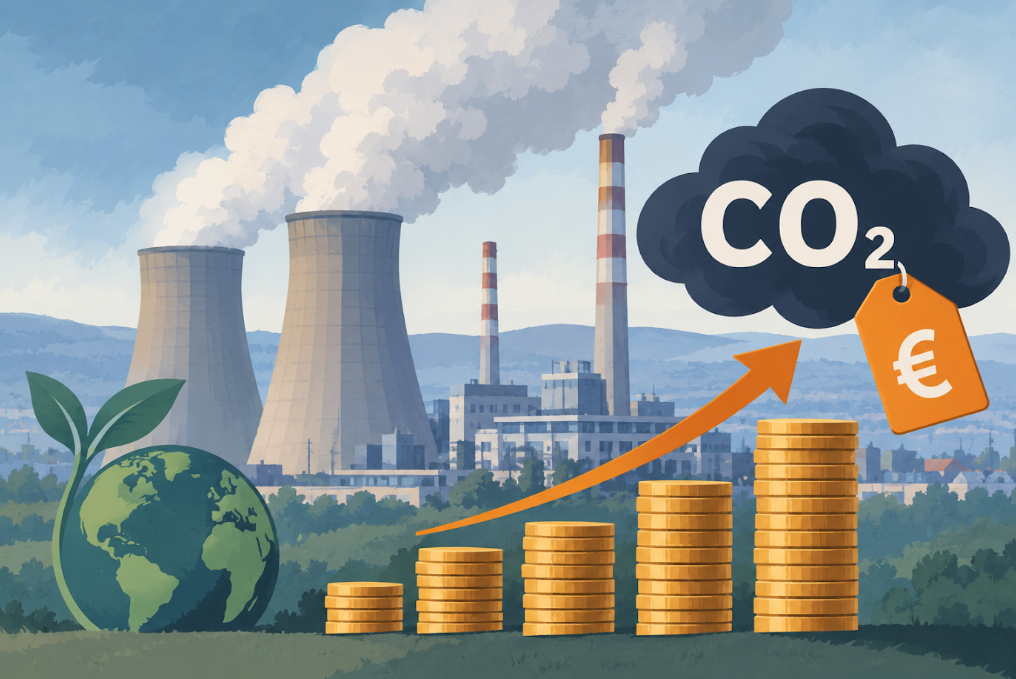
Kosovo still does not pay a domestic price for the carbon emitted during electricity production and industry. Air pollution and climate change are increasingly pushing countries to seek ways to make pollution more costly for those who cause it. One of the main instruments is carbon pricing, through which businesses and industry pay depending on the amount of greenhouse gases they emit.
The goal is for pollution not to remain a cost borne by society and citizens, but to be included in the economic accounts of producers. In this way, the aim is to encourage investment in cleaner technologies and a gradual transition toward renewable energy sources.
In Kosovo, the absence of a carbon tax raises the question of how prepared the country is for this process, why implementation has been delayed, and who will bear the cost once such a mechanism is established.
How much could carbon cost for energy production?
One of the most sensitive issues is the impact that a carbon tax or price could have on the cost of electricity production by the Kosovo Energy Corporation (KEK) and, subsequently, on consumer bills.
According to the Energy Regulatory Office (ERO), electricity tariffs in Kosovo currently do not include a carbon cost, since such a tax does not exist. Such a cost would be reflected in the energy price only if it is established by law and becomes part of the production cost. The economic risk is directly linked to the fact that KEK produces energy using lignite. For this reason, setting a carbon price would bring additional costs for every megawatt-hour of energy produced.
In its response to this issue, ERO refers to regional analyses, according to which, if the carbon price were around 80 euros per ton of CO₂, the additional cost for energy production from lignite could reach around 70 to 80 euros per megawatt-hour (MWh).
This figure becomes particularly significant when compared with the current price at which KEK sells energy to the Universal Service Supplier. According to ERO, this price is 29.50 euros per MWh.
So, in the scenario mentioned by the regulator, the additional carbon cost would be significantly higher than the current selling price of energy by KEK.
This does not mean that citizens' bills would automatically increase by the same amount. The final impact would depend on the level of the carbon price, the manner of its implementation, the transition period, and regulatory decisions on how costs would be reflected in the energy market.
ERO assesses that the impact could be mitigated if the mechanism is established gradually and if the revenues collected are used for investments in renewable sources and for supporting consumers in need. This makes decisive not only the question of how high the carbon price will be, but also how the revenues from it will be used. Without a transparent reinvestment mechanism and without protection for low-income households, such a policy could create additional pressure on consumers.
The Ministry of Environment acknowledges that the legal basis has not been consolidated
The institutions' responses show that Kosovo still does not have a defined model for implementing carbon pricing.
The Ministry of Environment and Spatial Planning describes Kosovo as being in an early stage of preparations and acknowledges that the legal basis regulating this field has not yet been consolidated. According to the Ministry, after the tax is established, the greatest impact is expected to be in the energy sector and in industry, but citizens will also be affected as energy consumers. At this point, the Ministry's response requires further technical clarification.
According to it, the tax would be calculated based on the amount consumed, but it does not specify whether this refers to a tax on electricity consumption, on emissions linked to its production, or on another carbon pricing model. This distinction is important, because carbon pricing mechanisms are usually linked to the amount of greenhouse gas emissions, not simply to the amount of energy consumed by a household. Depending on the model Kosovo chooses, the entities that will bear the cost and the way it will be reflected on consumers may also change.
ERO, meanwhile, clarifies that the Carbon Border Adjustment Mechanism (CBAM) does not directly affect consumer bills in Kosovo. According to it, CBAM applies to energy exported to the European Union and should not be confused with the establishment of a domestic tax.
So, as two different issues, one is the cost that may be established in Kosovo for emissions from energy production, while the other is the EU mechanism aimed at setting a cost for the carbon embedded in certain categories of products imported into the European market.
Strategies foresaw preparations, but implementation has lagged behind
The Law on Climate Change, adopted in 2024, creates a framework for climate policies, including the monitoring and reporting of greenhouse gas emissions. However, it does not by itself establish a carbon tax and does not set a price that producers must pay for their emissions.
In December 2025, Administrative Instruction (QRK no. 06/2025) was also published, setting out the methodology for monitoring and reporting greenhouse gas emissions and climate change-related information at the country level. This is a step in building the measurement and reporting system, but it does not yet constitute a carbon pricing mechanism. Without reliable emissions data, without a monitoring, reporting and verification system, and without institutions overseeing implementation, such a scheme cannot function sustainably.
The Energy Strategy 2022-2031 had foreseen Kosovo's preparations for establishing
the carbon price and gradual alignment with the European Union Emissions Trading System (EU ETS). In this regard, steps were envisaged for drafting decarbonisation policies, aligning the rules for monitoring, reporting and verification of emissions, and building institutional capacities.
However, the progress report for the period January-June 2025 by the Ministry of Economy had identified a lack of progress in some of these activities, including the long-term decarbonisation strategy and the building of the institutional system for implementing the monitoring and reporting rules. These assessments pertain to the first half of 2025 and should be read in the context of that period. The adoption of the administrative instruction in December of that same year constitutes a subsequent step, but does not by itself resolve the issue of establishing a carbon price.
Another signal of the ambiguity of Kosovo's policy direction is the position presented in the summary document of the Informal Ministerial Council of the Energy Community, on 17 July 2025. It notes that Kosovo had declared that at that time it had no intention of introducing a carbon pricing instrument.
This position needs to be viewed against the objectives of the Energy Strategy 2022-2031, which had envisaged preparing the country for such a mechanism and alignment with European policies. If the strategy set a direction for preparing the carbon price, while at the regional level Kosovo declared that it had no intention of introducing such an instrument, it remains necessary to clarify whether this position has changed, whether decision-making has been postponed, or whether the Government is considering another model.
171 days with air above the permitted limits
That the issue of pollution is not merely a debate about future policies, but a problem that already affects the lives of citizens, is evidenced by the Ombudsperson's report on air quality in Kosovo, published on 10 November 2026.
According to data from the Kosovo Environmental Protection Agency, included in the report, during 2025, 171 days with exceedances of the daily limit value for PM₁₀ particles were recorded in the state monitoring network. The highest concentrations were recorded mainly during the winter season.
On the other hand, the National Institute of Public Health of Kosovo has assessed that exposure to air pollution is linked to an increased risk of respiratory and cardiovascular diseases, especially in children, the elderly and people with chronic diseases.
The Ombudsperson's report does not limit the problem to sources of pollution alone. It identifies challenges in the implementation of legislation, a lack of sufficient human and technical capacities for inspection oversight, as well as the need to strengthen monitoring and inter-institutional coordination
.
These findings are directly related to the debate on the carbon price, but should not be confused with it. PM₁₀ particles and carbon dioxide are different pollutants, with different impacts and regulatory mechanisms. However, dependence on fossil fuels and weaknesses in pollution control show that Kosovo needs a broader and more effective environmental protection policy.
In Kosovo's profile, in the report "Europe's Environment 2025" published by the European Environment Agency, the energy sector is assessed to have accounted for about 87 per cent of greenhouse gas emissions, based on the 2021 inventory. Most of these emissions are linked to the burning of fossil fuels, energy transformation, industry and transport.
This makes the energy sector one of the key points of any policy for reducing emissions. But, as the Ombudsperson's findings also show, reducing pollution requires more than setting a financial price. It requires continuous monitoring, effective inspection and enforcement of existing laws.
What have the countries of the region done?
Unlike Kosovo, several countries in the region have taken concrete steps to establish carbon pricing mechanisms.
Serbia, from 1 January 2026, has introduced a tax of four euros per tonne of CO₂ equivalent emissions. It covers several industrial sectors, including electricity generation, cement, iron, steel and aluminium.
Albania has a carbon tax of 14.59 euros per tonne, according to data published by Tax Foundation Europe for April 2026.
Montenegro, meanwhile, applies an emissions trading system (ETS), with a reported price of around 24 euros per tonne of CO₂ equivalent.
In Bosnia and Herzegovina, the development of an emissions trading system is planned, while North Macedonia has considered the possibility of introducing a carbon tax.
For Kosovo, the Energy Community report on readiness for the CBAM mechanism, published in 2025, noted that the country had not planned to establish a carbon pricing system.
The comparison shows that Kosovo still does not have such an instrument, while other countries have begun to create different mechanisms. However, prices are not fully comparable, as the sectors covered, the calculation method and the type of instrument differ.
The absence of a carbon price is not the result of a lack of objectives in strategic documents.
Kosovo's Energy Strategy 2022-2031 had envisaged preparing the country for the introduction of a carbon price and gradual alignment with the European Union Emissions Trading System (EU ETS). In this regard, steps were envisaged for creating the system for monitoring, reporting and verification of emissions, as well as for building institutional capacities.
The Law on Climate Change, adopted in 2024, created the legal basis for the development of climate policies. While in December 2025, Administrative Instruction QRK no. 06/2025 was published, which sets out the methodology for monitoring and reporting greenhouse gas emissions.
However, these steps do not mean that Kosovo has established the carbon price. They create the conditions for measuring and reporting emissions, but decision-making is still needed on the financial instrument, the sectors to be covered and the manner of implementation.
A
another element that shows the ambiguity of Kosovo's policy is the position presented in the summary document of the Informal Ministerial Council of the Energy Community, on 17 July 2025. That document notes that Kosovo had declared it had no intention of introducing a carbon pricing instrument. This represents an inconsistency with the direction set out in the Energy Strategy, which had provided for the preparation of such a mechanism.
CBAM puts Kosovo's industry before a new reality
While Kosovo continues to discuss the introduction of a domestic carbon pricing mechanism, the European Union has entered the final phase of implementation of the Carbon Border Adjustment Mechanism, known as CBAM.
The mechanism entered into force in its final phase from 1 January 2026, after a transitional reporting period that had begun in October 2023 and had ended at the end of 2025. CBAM covers several categories of emission-intensive products, including cement, iron and steel, aluminium, fertilisers, electricity and hydrogen. For Kosovo, the potential impact is linked in particular to the sectors that export products covered by this mechanism. According to the Central Bank of Kosovo, around 34 per cent of the country's exports in 2024 were destined for European Union countries. This makes it important to assess the exposure of domestic industry to the new costs linked to emissions.
CBAM is not a tax that is automatically imposed on all Kosovar producers. The legal obligation in the EU falls on authorised importers in the European market, while the impact on producers from Kosovo may appear through export costs, reporting requirements and the competitiveness of products.
An important element is that, under CBAM rules, the carbon price effectively paid in the country of origin may be taken into account, if the conditions are met and the relevant payments are documented. This means that a domestic mechanism could matter for Kosovar exporters, but does not automatically create an exemption from CBAM.
In the absence of a domestic system, Kosovar companies may face additional difficulties in documenting emissions and adapting to the requirements of the European market. For energy-intensive sectors, this may affect the cost and competitiveness of products.
The issue of carbon pricing has also been raised by civil society organisations. The Institute for Development Policy (INDEP), as part of Kosovo's Sustainable Development Week in 2022, had organised a special discussion on the carbon tax, the challenges and opportunities it presents for the country's policies.
The recommendations that emerged from this discussion included the preparation of legislation and bylaws, the creation of an environmental fund and the establishment of mechanisms that would mitigate the negative consequences for the affected sectors and groups. One of the proposals was that revenues from the carbon price be reinvested in green energy and sustainable transport.
On 17 June 2026, the GAP Institute published the analysis "Green Industrial Policies: Analysis of the Kosovo Context", which addresses the challenges of green industrial policies and the potential costs of inaction. In this context, particular attention is given to dependence on coal, the slow development of renewable sources and the impact that CBAM may have on domestic industry. These positions place carbon pricing in a broader context of industrial and social policies. Such a mechanism cannot function solely as an instrument for collecting revenue. It must be accompanied by measures that help enterprises reduce emissions, consumers cope with the transition and the energy sector invest in alternative sources. If revenues are not directed towards these objectives, the risk is that the carbon price is perceived only as a new financial burden, without a visible improvement in the environmental situation.
From reporting problems to responsibility for solving them
The Ombudsperson's latest report on air states that the problem has been known for years, but the measures to solve it have not advanced at the necessary pace. This assessment also sums up part of the challenge that Kosovo faces in its energy and carbon policy.
It is not enough to envisage carbon pricing in a strategy, to adopt a law on climate change or to set targets for renewable energy. Functional monitoring systems are needed, institutions with sufficient staff and equipment, effective inspection, coordination between the central and local levels and clear accountability mechanisms.
In the energy sector, this requires investment in renewable sources, modernisation of the system and preparation for the new European market mechanisms.
In the air sector, it requires control of pollution sources, enforcement of standards and sustainable measures to reduce emissions. These are policies that must move forward together. Introducing a carbon price without institutional preparation and without energy alternatives could increase costs for producers and consumers. But the continued postponement of reforms could also increase industry's exposure to European rules and prolong dependence on a high-emission energy model.
Kosovo must decide not only whether to tax carbon, but what to do with it
The debate on the carbon tax in Kosovo cannot be reduced to the question of whether it will increase electricity bills. The broader question is how the transition from a lignite-based economy to a lower-emission system will be made, without creating unbearable shocks for consumers and businesses.
ZRRE acknowledges that a carbon price could significantly increase the cost of production from lignite. The Ministry of Environment confirms that Kosovo is at an early stage of preparations and that the legal basis has not yet been consolidated. Meanwhile, the Ombudsperson's reports show that even in areas where laws, monitoring and responsible institutions exist, enforcement continues to be a problem.
This makes a clear institutional position essential: Will Kosovo
Equally important is to determine how the revenues will be used, what support vulnerable families will receive, how industry will be helped to reduce emissions and what investments will be made to reduce dependence on lignite.
Currently, Kosovo does not pay a local price for carbon emitted during energy production. But the cost of pollution has not disappeared. It manifests in public health, in environmental degradation, in infrastructure weaknesses and in economic competitiveness challenges. Recent air reports made it clear that the problem is not a lack of warnings. Pollution data exist, institutional shortcomings have been identified and recommendations have been addressed. What continues to be missing is sustained implementation.
Therefore, Kosovo's challenge is not only to set a price for carbon. But to build a policy that makes pollution less profitable, clean investments more attractive and environmental protection a real responsibility of institutions, not just an objective in strategic documents. /ORAinfo/
This publication was prepared in cooperation with the Association of Journalists of Kosovo (AGK), within the framework of the "Innovation and Training Park Prizren" program, funded by the German Federal Ministry for Economic Cooperation and Development (BMZ) and the Government of Kosovo, and implemented by Deutsche Gesellschaft für Internationale Zusammenarbeit (GIZ) GmbH.
The views expressed in this publication are those of the author/authors and do not necessarily reflect the positions of GIZ or the Governments of Kosovo and Germany.
News source: orainfo.net
Note: This material has been processed for informational purposes by the Kosova.Today Portal.