Rizvanolli: Kosovo bans electricity trade with Serbian companies as of today, after Belgrade blocked transmission lines
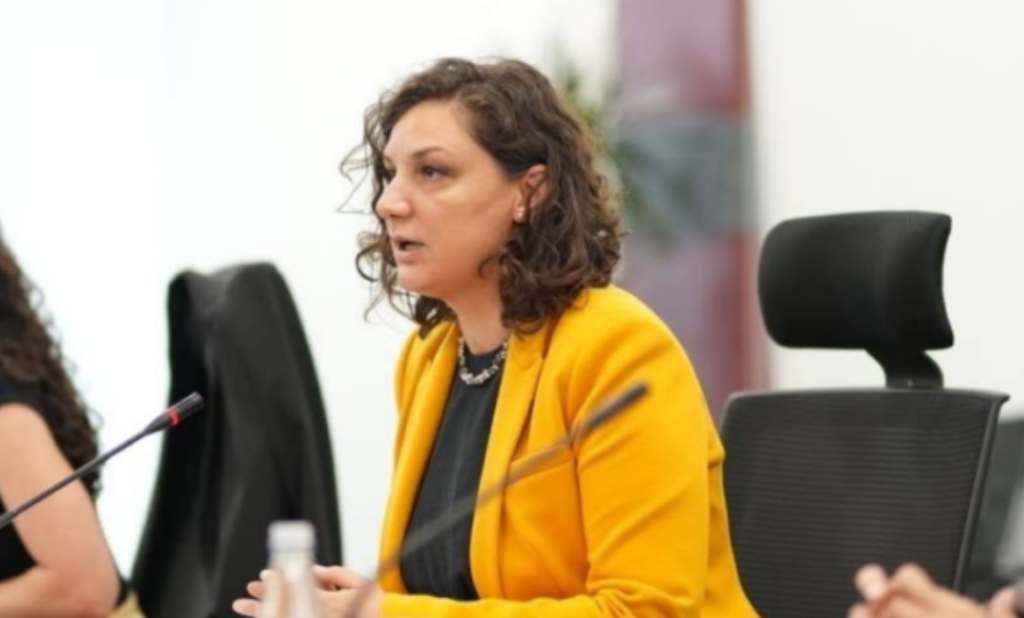
Kosovo’s Economy Minister, Artane Rizvanolli, has explained the government’s decision to ban electricity trade with Serbian companies, stating the move is a response to Belgrade’s blocking of transmission lines.
Speaking at a press conference following the government meeting, Rizvanolli stressed that since December 14, 2020—when Kosovo became part of an independent energy regulatory bloc with Albania—Serbia has blocked transmission lines with Kosovo for commercial allocation and trade.
According to her, this has caused significant financial damage and at times threatened electricity supply.
She cited 2024 as an example, when, due to the blocked lines, load on other lines—particularly those connecting to Montenegro and North Macedonia—increased, driving up cross-border capacity prices.
“The annual cost for citizens rose from €1 million to over €9 million that year,” Rizvanolli said.
The minister also mentioned January of this year, when she claimed the line blockades had threatened electricity supply security.
She said that on January 14 and 20, the Kosovo Transmission, System and Market Operator (KOSTT) was forced to implement nationwide electricity reductions due to insufficient supply.
Rizvanolli stressed that since taking office in March 2021, the government has consistently raised the issue in international mechanisms and with international partners to pressure Serbia into lifting the blockades.
“We do not want to lift the lines with Serbia because we aim to import energy from Serbia. However, blocking these lines means they are unusable for us for transit,” she said.
According to the minister, the key change over the past year was the Energy Community Council of Ministers’ decision in December 2025, which found Serbia in breach of the treaty and demanded the lines be unblocked by July 1, 2026.
Nevertheless, she said, this decision has not been implemented despite the extended deadline and efforts through the European Union.
Rizvanolli revealed that last week she wrote to the Minister of Industry, Entrepreneurship and Trade, Mimoza Kusari-Lila, to review trade measures in response to Serbia.
She also clarified that the new decision does not imply that Kosovo’s main energy institutions and companies have previously conducted transactions with Serbian firms.
“This does not mean we have had electricity exchanges with Serbia up to now. KOSTT and the Kosovo Energy Corporation (KEK) have not conducted transactions with Serbian companies during our term,” Rizvanolli said.
She added that, according to information from the Kosovo Electricity Distribution and Supply Company (KEDS) and the Kosovo Electricity Supply Company (KESCO), neither of these firms has engaged in transactions with Serbian companies either.
“But this was not banned until today—starting today, it is banned,” the minister stressed.
Finally, Rizvanolli noted that with more traders now in the energy market, the government deemed it necessary to impose the ban to prevent trade with companies directly or indirectly linked to Serbian owners.
Source: orainfo.net
Note: This material has been processed for informational purposes by the Kosovo.Today portal.