Switzerland strengthens school exchanges to bridge linguistic regions with over 32,000 student participants
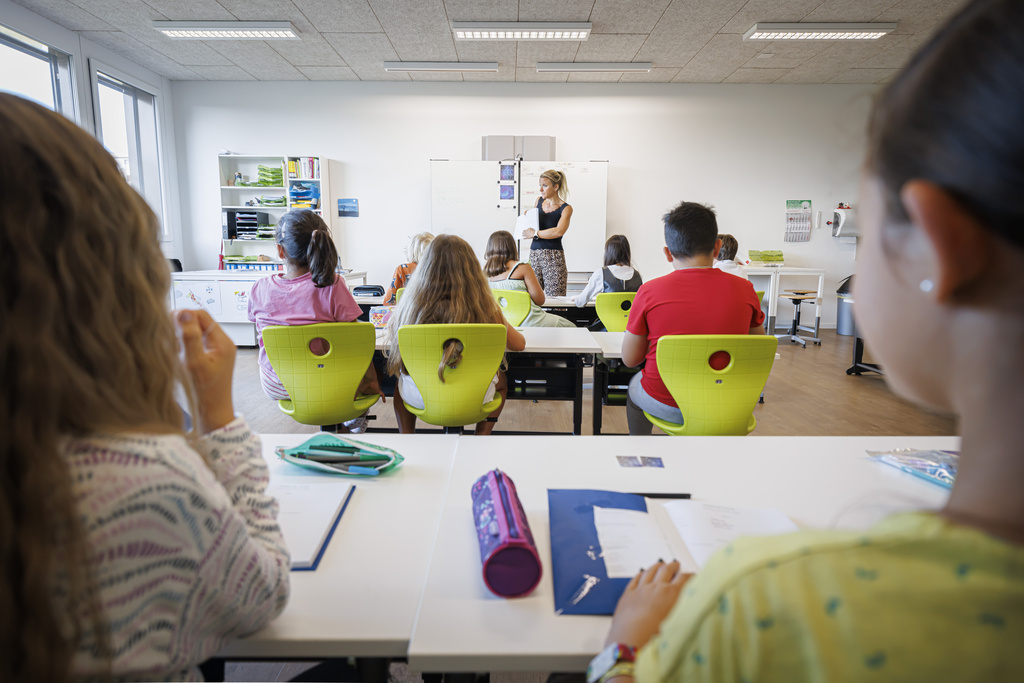
Zurich and Vaud cantons in Switzerland are expanding school-exchange programmes to boost the learning of national languages and strengthen ties between language communities. Over the past five years, more than 32,000 pupils from both cantons have taken part in visits and exchange activities at a time when the teaching of French in German-speaking Swiss primary schools is facing political headwinds.
Co-operation between the two cantons was presented at a media conference in Lausanne, where Zurich’s education director Silvia Steiner and her Vaud counterpart Frédéric Borloz stressed the importance of school exchanges for the linguistic and cultural development of young people, albinfo.ch reports.
The five-year-old programme covers primary, lower-secondary and vocational schools. Its aim is to give pupils the chance to practise their second national language in real-life situations while learning about the daily lives of peers from other Swiss regions.
According to the figures presented, more than 16,000 pupils from Zurich have visited Vaud, while a similar number from Vaud have travelled to Zurich. Visits have ranged from short meetings to longer stays for language immersion.
In addition to compulsory-school pupils, hundreds of teenagers from upper-secondary and vocational-training programmes have also taken part.
Exchanges go beyond physical visits
A key feature of the partnership is the use of varied communication methods between pupils.
Schools organise bilingual outings, joint events and virtual exchanges known as e-tandem, where pupils use the internet to help one another learn German and French.
In this way, young people act not only as learners but also as teachers, using their native language to assist classmates from the other canton.
Interest in the programmes has grown steadily among pupils, teachers and parents. Education authorities in both cantons now want to make exchanges even easier. To that end, they plan to create a dedicated platform where teachers can register their classes and find partner schools in the other canton.
Primary-school pupils will also be encouraged to start exchanging letters with peers as soon as they begin learning French.
Political debate over French in Zurich
The expansion of exchange programmes comes as the teaching of French in Zurich primary schools has become a political football.
Most members of the cantonal parliament have backed removing French from the primary curriculum and shifting it to lower-secondary level.
Supporters of the change argue that teaching several languages at an early age can create difficulties for some pupils and that current results are not always satisfactory.
Yet Zurich’s education director Silvia Steiner sees no contradiction between this debate and the expansion of school exchanges. She notes that the cantonal parliament has simultaneously asked her to develop language-exchange programmes further.
Steiner says it is necessary to assess pupils’ French results and improve teaching methods where targets are not met. In the first quarter of 2027 she is expected to submit a proposal to parliament on the future of French in Zurich primary schools.
While acknowledging criticism of the current system, Steiner supports improving instruction rather than abandoning it.
Four national languages, a cultural asset for Switzerland
For Frédéric Borloz, Vaud’s education director, exchanges between cantons are far more than an exercise in learning a foreign language.
They give young people a chance to meet fellow citizens, better understand cultural differences and develop a sense of belonging to a shared country.
Switzerland has four national languages: German, French, Italian and Romansh. This linguistic diversity is seen as a core feature of the country’s identity and political organisation.
Borloz regards linguistic diversity as a cultural and social asset that can be harnessed to strengthen cohesion and mutual understanding between regions.
Organising exchanges between language regions has not always been straightforward. One parent interviewed by Le News recalled trying in 2020 to set up a school exchange with German-speaking Switzerland, only to find some contacted teachers had no experience hosting pupils from French-speaking areas.
For some families, he said, arranging an exchange in Germany proved easier than within Switzerland’s own language regions.
Strengthening coexistence and national identity
Education authorities hope that expanding the programmes will help overcome such obstacles and make exchanges more accessible to schools and families.
Co-operation between Zurich and Vaud is seen as a model that could be adopted by other cantons.
Beyond improving language skills, the exchanges aim to develop pupils’ communication abilities, independence and intercultural understanding. In a country where language communities often live in separate regions with limited contact, these initiatives are viewed as a practical way to reinforce national cohesion.
The post
Switzerland strengthens school exchanges to bridge language regions, with over 32,000 participating students
Source: albinfo.ch
Note: This material has been processed for informational purposes by the Kosovo.Today portal.